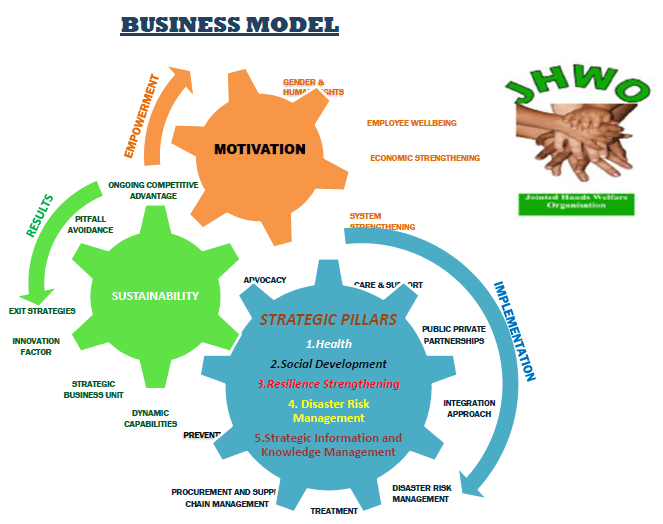
The key principles underlying JHWO’s Theory of Change are that:
If the state fulfils its primary responsibility for action against harmful norms by implementing laws and policies on strategic pillar interventions, then a harm and disease-free society will be achieved as envisaged.
Context is critical: If continuous research is supported then there will be interventions that are tailored based on research, monitoring impacts and analysis of the particular factors affecting harmful norms in communities that JHWO is programming.
If holistic, multi-sectorial and public-private partnership approaches are engaged then there will be more impact: networking, coordinated interventions at multiple levels, across sectors and over multiple timeframes that are likely to address aspects of, and having greater impact on harmful norms
Communities and JHWO create and sustain change through inclusive social movements which in turn will result in sustainable change in the lives of vulnerable women and girls.
If significant processes of social change are engaged then there will be sustainable reduction in harmful acts, including in social norms, at all levels.
If women and girls are empowered through education and information focusing on their rights, the process will be both the means and the end: focusing on the rights of, and being accountable to, women and girls is the most effective way of tackling gender inequality as the root cause of violence against women and girls.